Showing posts with label Kazenoko Kyushu. Show all posts
Showing posts with label Kazenoko Kyushu. Show all posts
Tuesday, August 25, 2009
Churchill Fellowship Part One- KYUSHU
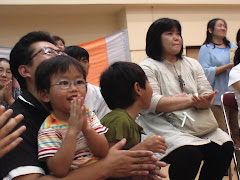
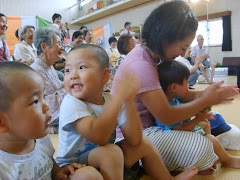
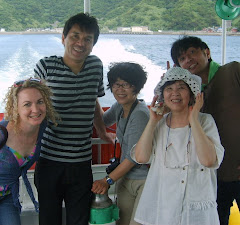
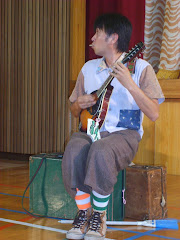
This is a little movie I have made of my time on Kyushu (the south island of Japan) with Kazenoko Children's Theatre Company.
Footage includes:
Furato Burato Kagoshima Tour
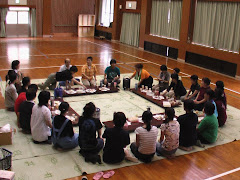
Clown Workshop with Kazenoko Kyushu
Yamagasa Festival
Translation Routine at Kodomogekijou Conference
Nan Nan Nan-de Man Nagasaki Tour


Monday, August 24, 2009
Koganenomi, The Golden Bean

Tsutomu-san's One Man Show
Once again, I am met today by Kumiko-san who is acting as my guide while I am in Tokyo, escorting me to a wide variety of Kazenoko shows all over town in a wide variety of spaces (from community halls, to school gyms to tiny kindergartens). I am always relieved to see her familiar smiling face when I make my way through the exit gates of the destination train station, after following the complex directions to get there, which usually involves changing trains at least three times and traveling up to an hour on crowded carriages through busy stations.
As we make our way on foot through the street to the venue, I ask Kumiko to tell me a little about Koganenomi. It is a one man show performed by Tanaka Tsutomu-san (who, incidently, is brother of Kumiko’s husband, Tanaka Tooru-san, who is also a Kazenoko performer). I am puzzled as Kumiko explains that the design of the show involves a puzzle…I wonder to myself whether or not I have understood correctly. “What kind of puzzle?” I ask, but I don’t understand Kumiko’s explanation. It doesn’t matter because I know I will see it for myself, soon enough. I move onto the content of the work itself. “Is it a folk tale?”, I ask. Kumiko answers, Koganenomi means ‘The Golden Bean’ and is a tale created by Tsutomu-san about a carpenter who is struck by lightening and looses his memory. He visits a doctor and is told that the only thing that will help him to get his memory back is a golden bean. And so he journeys to find it and meets some interesting characters along the way.
At this point in our journey, we come across a Dango stall (rice balls on sticks), they smell so delicious that Kumiko and I both stop and look. Kumiko buys Go-Hon (five sticks) to take as an Omiyage (Thank you present) for Tsutomu-san. Then, as though we had not stopped at all, Kumiko explains “Tsutomu-san made up this story for his children, and he has four of them so it grew and grew over the years”. I wonder how a performer manages to feed four children, and ask Kumiko what his wife does, “She works in the Kazenoko office”; I am discovering that Kazenoko really is one big family.
KOGANENOMI- SHOW DESCRIPTION
Tsutomu-san steps out from behind the flat playing a trumpet like a clown (he is not very good at it but is trying very hard…and so the audience loves him and wants him to succeed). Then he starts to experiment with the mouth piece of the trumpet and the funny sounds it makes and starts to attach other found objects to his mouth piece. First a long pipe, then a big plastic bottle and a watering can. The children are delighted and thoroughly ‘warmed up’. It is now time for the story to begin and the ‘puzzle’ is revealed!
It is a large (1 x 1.5 meters) hand painted, wooden puzzle, containing all the characters and set items that Tsutomu- san will expertly tell the Koganenomi tale with. They all fit together perfectly, creating a spectacularly colourful puzzle. Tsutomu-san animates the pieces one by one, like puppets to paint the large stage pictures (for example, when the carpenter is struck by a lightening bolt) and then turns into the character himself to act out the more detailed pictures (facial expressions, reactions and delivery of text). This way he can play the entire cast of the story in a light manner where by he jumps from the role of story teller/ puppeteer to actor.
The content of the story is very much like a Rakugo routine in that it is filled with comic characters, routines and word plays and has no moral but is purely for the sake of entertainment. After travelling the land, meeting all sorts of interesting characters from dancing girls to a group of babies to a very hungry Sumo Wrestler, the carpenter finally finds the golden bean, eats it and his memory returns. But it doesn’t end there, with the help of the audience, Tsutomu-san places all the pieces of the puzzle back together. He plays naïve beautifully and sincerely and pretends not to know how it goes back together. This opens up communication with the audience and the children instruct Tsutomu on what goes where. He expertly manages the children so that all have a chance to input and the interaction itself becomes a comedy routine with Tsutomu-san playing off the various unexpected suggestions expertly like when one little girl said, “Put the Sumo-san on top of the babies!”, Tsutomu-san responded, “But if I do surely I will squash them!”.
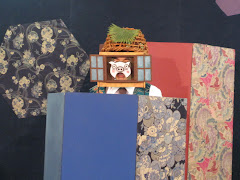
“And now, for the second story!” announces Tsutomu-san. I am surprised- will he be able to hold the attention of the audience for another tale? We have already been sitting for forty minutes- in my experience in Australia this is normally when we are in the last five minutes of the show, then the performers take some questions from the audience and then pack up the show. Tsutomu gets everyone to have a stretch and then we count down from ten while he prepares for the second tale. A flat is moved downstage and from here, each time Tsutomu-san emerges from behind that flat, he is wearing a different mask in a different characterisation. He now tells the children a traditional folk tale of the Kitsune and the Tanouki (the Fox and the Racoon). Not only do the Fox and Racoon feature in this tale, but also a clever mosquito and an Oni (The red faced, long nosed monster that appears in many traditional Japanese folk tales). The stand out performer, however, in the telling of this tale is not Tsutomu-san, who expertly jumps from playing Monster, to Fox, to damsel in distress, but the little girl that is invited from the audience to play the mosquito. Tsutomu asks her to give a Jiko-shoukai (Self Introduction) to the audience and then carefully introduces her to the mosquito mask (a funny looking thing with bulging eyes and a long beak, which he has made himself). The mask sits on top of her head so we can see her delightful, smiling face the whole time that she helps Tsutomu on stage. She giggles the whole time, while expertly following his instructions, which include sneaking up behind the Oni and biting him on the bottom!
I discover that this level of audience interaction, is deeply rooted in the Kazenoko telling of stories. I recall that Yuko-san also invited a volunteer from the audience to help her with the ‘Paper – play’ part of Asobo. Afterwards, Kumiko-san tells me about Ni Tasu San, one of the early Kazenoko ensembles (that Tsutomu-san worked in) that toured small scale shows around to kindergartens. The stories that the ensemble told were invariably folk tales and always incorporated children from the audience as volunteers to play different roles.
After the show I have a chance to talk with Tsutomu-san again and thank him for the performance. I ask him if this is a particular style of performance in Japan (through the animation of the puzzle) and he tells me proudly that it is his own invention. And goes on to passionately describe that he was taught by his Sensei that there is no use in doing what someone else is already doing, be original! I am a little surprised because I had assumed that in Japan, the art lies in learning exactly how it was done and always has been done, perfecting that and then passing it on. It seems that this is only the case in the world of the Dentougeinou (the traditional arts), and the world of contemporary theatre has a completely different approach. I am relieved because it is in line with my mission in the arts, which has always been towards the creation of new work, for a new audience.
As Kumiko-san and I leave the community centre and make our way back to the station through the streets of Habarigaoka, we both have an unspoken understanding, that on the way back to the station, we will stop at the little stall on the side of the road and buy a Dango each. They are warm and delicious. When we board the train we find that we are not talking about theatre (as we usually do) we are talking about food and realise we are still hungry. We feel like the Sumo-san from Tsutomu’s play who eats rice cake after rice cake but is still hungry. We decide to change trains at Asakusa where we head straight for big hot bowls of Ramen. Full of food and inspiration, we say goodbye. Another great day with Kumiko-san!
http://www.kazenoko.co.jp/infantwork/newfolder-19/
(Visit this link to see images of Koganenomi)
Sunday, August 2, 2009
Sayonara, Kazenoko Kyushu! Mata Aimashoo!
風の子九州の皆さんへ、
沖縄に着きましたそしてとても暑いですよ。 毎日いろいろな世界じゅうから来たさくひんを見ています。けど、まだまだ風の子九州見のようなさいこなさくひんを見ていなかったですよ。
4日ににっこりぽっかりを見に行くことを楽しみにしています。
私は本当にかんしゃしたいです。7月に私風の子九州と一緒にすごした時間はおいしいとこどうりでしたよ。風の子九州のさくひんが見えたし、いろいろな行ったことがない島に行けたし、ワークショップも出来たし、やまかさまつりでいっぱいおしりを見えたし、皆と一緒に東京に行けたし、SAADARIのさくひんが見えたし、とてもとてもいい勉強になりました。どうもありがとうございました。
皆さんはいつも私にとてもしんせつので、わからない時でもいいけいけんでした。Thank you for your support and friendship.
また会いましょう!
それじゃ、皆さん、元気で,がんばって、楽しんでね!
Yours in theatre,
Liz Skitch
スキチ リズ
Actors on an Annual Wage

Kazenoko Actors, Hiroko and Saske, working Front of House.
One of the remarkable things about Kazenoko in Japan is that their actors receive an annual wage. This intrigues me because in Australia, actors work contract to contract and in between times, take up other employment to pay the bills. Asano-san who was part of the acting ensemble for about ten years before moving into the role of writer/ director, explains “But not all theatre companies in Japan work like Kazenoko, most are like Australia, they contract the actors when they need them”, she tells me. Infact, Kazenoko is one of the five theatre companies in Japan that employ this system. “It was about 20 years ago that we decided to put actors on an annual wage. We found that our actors kept getting sick because they couldn’t afford to eat properly when they weren’t working for us and then when it was time for the next tour, it was hard to get the ensemble together again”, she explains.
The Kazenoko wages vary depending on the city in which you are based. Kazenoko have companies in Hokkaido, Tokyo, Kansai, Tohoku, Chushikou and Kyushu, while all share the same mission, each are incorporated as separate organizations, with varying company structures and their own ensembles and bodies of work. All together there are 128 Kazenoko staff (actors and administrators).
Kazenoko Kyushu has 23 staff, 14 of which are actors. Actor and Administrators working for Kazenoko Kyushu earn only 11 9000 Yen a month (928 AUS dollars) when they start out and each year this amount increases a little and the top wage is about 22 3000 Yen (1 739 AUS dollars). “It is not a lot of money”, says company President Kariya-san. “It is only about half of the annual wage in Japan” he explains.
And to give you an idea of how far this goes, the average monthly rent for a small apartment in Fukuoka is between 35000 and 40000 Yen ($273- $312) per month . So it is not great, but you can afford to pay the bills and eat, furthermore income tax in Japan is very low (about 1.5% for a low income earner). The wage seems to suit young actors okay but doesn’t seem to costs for the actors with families to care for. Hence one of Kazenoko’s main challenges of late is finding a way to hang on to their male actors beyond the age of about thirty.
Working on an annual wage means that the Kazenoko actors are required to carry out administrative tasks, workshops in schools and other jobs relating to the day to day running of the theatre company when not in rehearsals or on tour, hence increasing the efficiency of the company and cutting back on administrative costs.
So how does Kazenoko Kyushu survive? Unlike in Australia, there is no operational funding in Japan for theatre companies and so Kazenoko Kyushu constantly apply for project funding. In a good year their total takings in grants is about 1500 0000 Yen (117 000 AUS dollars). But in years when they are not so successful in their funding applications, theatre companies in Japan resort to taking out bank loans.
Needless to say both the company and the actors are doing it tough but there is a lot to be said for the security that an annual wage provides and the freedom it gives the company to continually tour its body of work locally, nationally and internationally.
The reality in Australia is that performers are very well represented by the Media and Entertainment Arts Alliance and as a result, when we are contracted for work, we are well paid and under good conditions (in comparison to Japanese performers). However, Australian performers and theatre makers always face hard times when in between contracts.
The Australian population is small, we need to find a new audience and this means that following local seasons it is integral to tour this work interstate and overseas. And small ensembles that can develop, produce and perform their work are in the best position to do this but they need more support. I hope that in the future, funding bodies in Australia and larger theatre companies and festivals will make it a priority to invest more in small ensembles of multi-skilled performers who can work onstage and behind the scenes on an annual wage (as recommended by MEAA). This may mean some radical re-structuring and re-allocation on funds but if we want to be realistic about creating a more sustainable future for theatre companies and performers, surely we should be investing in the most efficient models?
Peekaboo

It is summer holidays in Japan and there are festivals everywhere you go. Japan loves it’s festivals and they take on many shapes and sizes. Each town has its traditional ‘Matsuri’ (Festival) which generally involves the men in the town gathering to cry ‘Washoi! Washoi!’ as they carry large decorated floats through the town wearing nothing but loincloths to the local Shinto shrine. Then there are the fireworks festivals, these take place during the summer and young and old gather by riverbanks to delight in these brilliant displays, wearing ‘ukatas’ (summer kimonos) and waving ‘uchiwas’ (fans). There are all kinds of festivals: rock festivals, beach festivals, full moon festivals and of particular interest to me this visit, children’s festivals.
I have travelled to Tokyo with the Kazenoko Kyushu for a performance of their acclaimed work for zero to three year olds, Peekaboo which is being performed at a Summer Children's Festival at the Town Hall in Shibuya. The show was first created in 1985 when Kazenoko director, Ken Nakajima had just started a family of his own. With a baby and a toddler at home, he was inspired to create a show for this age group; something no one in Japan had ever done before. He told the three young actors to create an intimate show for a small audience, “This is a special show for Kazenoko- it is a true investment in this age group so I don’t mind if it makes a loss”, he said to his cast.
And it is indeed intimate. The audience sit on the floor in the round and I look across the circular playing space at the mothers and fathers nursing their small children. The atmosphere is calm but not without occasional cries, screams and toddlers who feel suddenly inspired to run across the stage. The show begins with song. Jiro, Hiroko and Saki, who are the Peekaboo ensemble, have beautiful voices and sing in sweet harmonies. All three also happen to be very cute and petite. I tell them later in the post show feedback session that I want to take them home to Australia with me…which would be easy because they would probably all fit in my 60L backpack.
The actors start by singing a sweet peekaboo song and interact gently with children in the front couple of rows leaning in close and singing ‘peekaboo!’. We learn early on when a little baby gets a fright and starts to cry that this is okay too- the actors are not unnerved, they nod in understanding and it is part of the experience. The actors play Japanese versions of “Row- row row the Boat”, holding the hands of the children, they play “Drop the hankie” and then the handkerchiefs become birds and they flutter through the audience and land on the shoulders and heads of the children. It is very interactive.
The whole experience is linked beautifully with song and half way through the show, each of the actors produce an instrument (a guitar, a violin and a cello) and as the room fills with the rich sound of the strings, everyone starts swaying. The children love the music and it soothes any cries.
The show climaxes with a story about ‘Ojisan’s Doubutsu’ (Grandpa’s Animals). Jiro-san plays the Grandpa and sits on a clever swivelling stool in centre stage and is visited by a chicken, a mouse, a lion and an octopus (all expertly physicalised by Saki and Hiroko and each unique and comic). It is a simple little story and holds the attention of the audience right through to its conclusion.
As with the other Kazenoko shows that I have seen for toddlers up, the story telling is only a small part of the show. Instead, the various forms of play and games leading up to the story occupy the bulk of the performance.
After the show I talk with the director, Ken Nakajima and he explains that apart from Jiro-san, the actors have changed many times since the first season. And as the members change, so too does the show, little by little. He explains that ‘Peekaboo’ is a very important playground for Kazenoko Kyushu actors to discover whether or not they can play with and for children. It requires great honesty, an ability to be in the moment and great sensitivity to the audience and the wide variety of reactions one experiences when performing for babies and toddlers.
Cut and paste the following link for a Peekaboo at Peekaboo!
http://www.kazenoko-kyushu.or.jp/sakuhin/peekaboo/top.htm
Thursday, July 30, 2009
A Conversation with Mark Radvan
Mark Radvan is Imaginary Theatre’s Founding Artistic Director. He is lecturer in Performance Studies and a Theatre Director at Queensland University of Technology, lecturing in Acting and Directing, a position he has held since 1984. He is former Artistic Director of QPAC’s ‘Out of the Box Festival for 3-8 year Olds’ where he lead two festivals in 2006 and 2008.
On Fri, Jul 10, 2009 at 2:54 PM, Mark Radvan wrote:
Hi Liz,
I’m very interested to know how Kazenoko positions children as ‘readers’ of performance – what assumptions they make about how children understand and interpret what the performers are doing, and how as makers they verify that understanding of children’s reception.
Also keen to know what aesthetic paradigms they mainly operate in?
Cheers
Mark
On 14/07/09 9:55 PM, "Liz Skitch" wrote:
Hi Mark,
Thanks for taking the time to read my blog. The Kazenoko Philosophy is beautiful.
This is their mission statement:
Children have free, imaginative and creative spirits. We, members of Kazenoko Theatre Company, aspire to create and produce theatrical programs which give inspiration and encouragement to children so that they will find life interesting and exciting. We want our programs to make them happy and feel positive about dealing with life.
We do not intend to present children a simplified version of adult theatre. Our approach is not based on the theory and style of sophisticated adult theatre. We recognise that children think, feel and express in their own ways. They have their own unique minds and point of views. Therefore we adopt their ways into our works. We follow their growing steps and try to integrate them into our creative process, so that our works will reflect their energy and joy. We believe that creative ability of young people is rooted in their sense of play, so we try to create theatre in which their creative sense of play is nurtured and enhanced.
We want to think together with children how to live a good life. With children we want to find out how to live in harmony with others. We would like to think that wars and violence are not the ways to achieve happiness. It is not easy to find the best solution to achieve a good life and ideal society but children are in the best position to think about it because they have no past to be bound firmly.
The members of Kazenoko Theatre Company wish to devote their energy and creative resources continuously to offer theatrical programs of high artistic and educational qualities to children and young people of the world.
Based on their work for 3-6 year olds I have seen so far they take the children step by step into the story through a series of games and comic routines (no fourth wall). Some of these games are familiar to us, others are traditional Japanese and some are made up by the actors. They games melt into story telling and all is linked by song and music. Their designs (set, music and use of space) are very original and sophisticated. The stories are told through image drama, often making extraordinary things out of found objects.
Their pieces for primary schoolers dive into the story a lot earlier but still take the time to establish a sense of play, a strong relationship between performers and performers and audience and to unpack how the set and visual effects are created (often the set is put together/ pulled apart as part of the show). Not sure if my favorite so far is Kyushu Kazenoko's "Nan-de Man" (a very contemporary story with a comic book feel about a little boy who always asks "Nan-de"- Why?) or Tokyo Kazenoko's "Nanka Youkai" (about an old Japanese Grandma and a little ghost- this has a more traditional Japanese feel). Both are very different to each other and are by the same director Ken Nakajima, who created "Toppinshan" (which was programmed as part of the 2000 “Out of the Box Festival”). Once again the visual effects and sound designs are stunning. Their shows are packed with humor and are very original.
In terms of measuring how children receive their shows, they carry out test showings for children post creative developments and then head back into the rehearsal room to make changes based on the responses. But because their works exist in repertoire for years (some up to 20), they are constantly improving them based on audience response. Also, they are very connected with the schools and have a very unique organisation here "Kodomo Gekijou" (The Children's Theatre Company) which is mad up mostly of mothers who are passionate about children's well being and children's theatre. They organise lots of performance opportunities through gathering the wider community together and contacting the theatre companies (in effect, they have become producers). But they have also started to become an important sounding board for Kazenoko Kyushu in the development of new works and feel a sense of ownership.
Signing off,
Liz Skitch
On Wed, Jul 15, 2009 at 9:11 AM, Mark Radvan wrote:
Hi Liz
Love all that and relate to it very strongly. We (at Imaginary) have been working on the premise of beginning each Tashi story in the world of the familiar for exactly the same reasons – to build the relationship with the audience and to ‘train’ the audience into the performance conventions we are using. Then we take them through the ‘portal’ into the world of the imaginary, the story proper, where they will be taken into places that can be funny one moment and dark and threatening the next. But because we have built that sense of trust and because we have reassured them from the start that this is ‘pretending’ not ‘real’ they are ready for a journey that is full spectrum. And underlying everything is the sense that this is a celebration of storytelling and therefore of the transformative power of the imagination, which answers the question of ‘why’ we are doing it.
This season has been the first with two new cast members – Bernadette Pryde and Kevin Spink – and because they are both ‘actors’ as well as performers we have been able to start exploring character in much greater detail and the emotional integrity and insight that comes with that. But it is a long journey. We are such a slot machine culture that we have little patience with organic processes. This is Year 6 of the Tashi Project and each year we investigate another layer and found ourselves needing another level of training and preparation. But it is starting to pay off – we sold 95% this season in the Visy (over 3500 tickets) - and in October we will be in two festivals – Brisbane Festival and then Sydney Children’s Festival.
The Mothers thing – so interesting – that’s what happens in South Korea too – the Mothers Club is immensely powerful and no children’s theatre company can afford not to pay attention to them as a major buying force and influence.
Cheers
Mark
On 16/07/09 11:35 AM, "Liz Skitch" wrote:
Hi Mark,
Beautiful hearing about the philosophy of Imaginary. It is good for me to see it articulated so clearly:
First a relationship is built between audience and performers.
Then the audience is taken through a portal into the world of the imaginary.
Yes- and because the trust has been built, and it has been set up as a 'play' and the audience know that visual effects are created by the actors, it is okay to for things to get a bit scary.
And the reason for doing it: the transformative power of the imagination. And I think that the imaginations is ignited (for children) through games various forms of play.
Sayonara,
Liz Skitch
On Thu, Jul 16, 2009 at 9:11 AM, Mark Radvan wrote:
Hi Liz
Re scary – I think the point to make here is that theatre for children can be a full spectrum dramatic experience (including high tension bits) if the trust has been built and the audience understands the dramatic conventions. I read an evaluation by Patch Theatre (Adelaide) of one of their works and the comment was made of one scene that the children got scared/worried in the argument/fight scene because some of them thought it was the adults themselves fighting rather than the characters. So the children hadn’t fully understood the dramatic convention of ‘pretending’.
I can identify with that – the very first time I saw television (I had never even seen a film – we were living in South America at the time) I was already 5 years old – it was The Lone Ranger (cowboy drama series) and I had no idea it was ‘acting’ - I fully assumed it was real and reacted as if people really were fighting and really being shot. It was quite traumatic. An adult tried to explain to me that it was acting, but I still didn’t understand that the violence was fictional. I though they must use criminals for the people who got hit or shot and that was part of their punishment! (I also couldn’t understand where people went to when they walked out of screen, or how you could be indoors one moment and riding on a horse the next. Of course these days by the time a child comes to the theatre they are very used to this jumpcut way of telling a story.)
I am working at the moment on a theory that children come to the theatre with certain dramaturgical conventions already in their heads. If for example they have had a lot of picture books and stories read to them they understand how words can then be expanded on in a picture. We can use this convention. Similarly they hear the dramaturgical ‘turning points’ of literary narrative – eg Just then..., or, and that’s the end of the story. So we can incorporate those. And so on. The exciting thing is that these often turn out to be the hidden rules of adult theatre, so the research we do leads us to findings that apply to all theatre.
Keep well and keep writing!
Mark
On Fri, Jul 10, 2009 at 2:54 PM, Mark Radvan
Hi Liz,
I’m very interested to know how Kazenoko positions children as ‘readers’ of performance – what assumptions they make about how children understand and interpret what the performers are doing, and how as makers they verify that understanding of children’s reception.
Also keen to know what aesthetic paradigms they mainly operate in?
Cheers
Mark
On 14/07/09 9:55 PM, "Liz Skitch"
Hi Mark,
Thanks for taking the time to read my blog. The Kazenoko Philosophy is beautiful.
This is their mission statement:
Children have free, imaginative and creative spirits. We, members of Kazenoko Theatre Company, aspire to create and produce theatrical programs which give inspiration and encouragement to children so that they will find life interesting and exciting. We want our programs to make them happy and feel positive about dealing with life.
We do not intend to present children a simplified version of adult theatre. Our approach is not based on the theory and style of sophisticated adult theatre. We recognise that children think, feel and express in their own ways. They have their own unique minds and point of views. Therefore we adopt their ways into our works. We follow their growing steps and try to integrate them into our creative process, so that our works will reflect their energy and joy. We believe that creative ability of young people is rooted in their sense of play, so we try to create theatre in which their creative sense of play is nurtured and enhanced.
We want to think together with children how to live a good life. With children we want to find out how to live in harmony with others. We would like to think that wars and violence are not the ways to achieve happiness. It is not easy to find the best solution to achieve a good life and ideal society but children are in the best position to think about it because they have no past to be bound firmly.
The members of Kazenoko Theatre Company wish to devote their energy and creative resources continuously to offer theatrical programs of high artistic and educational qualities to children and young people of the world.
Based on their work for 3-6 year olds I have seen so far they take the children step by step into the story through a series of games and comic routines (no fourth wall). Some of these games are familiar to us, others are traditional Japanese and some are made up by the actors. They games melt into story telling and all is linked by song and music. Their designs (set, music and use of space) are very original and sophisticated. The stories are told through image drama, often making extraordinary things out of found objects.
Their pieces for primary schoolers dive into the story a lot earlier but still take the time to establish a sense of play, a strong relationship between performers and performers and audience and to unpack how the set and visual effects are created (often the set is put together/ pulled apart as part of the show). Not sure if my favorite so far is Kyushu Kazenoko's "Nan-de Man" (a very contemporary story with a comic book feel about a little boy who always asks "Nan-de"- Why?) or Tokyo Kazenoko's "Nanka Youkai" (about an old Japanese Grandma and a little ghost- this has a more traditional Japanese feel). Both are very different to each other and are by the same director Ken Nakajima, who created "Toppinshan" (which was programmed as part of the 2000 “Out of the Box Festival”). Once again the visual effects and sound designs are stunning. Their shows are packed with humor and are very original.
In terms of measuring how children receive their shows, they carry out test showings for children post creative developments and then head back into the rehearsal room to make changes based on the responses. But because their works exist in repertoire for years (some up to 20), they are constantly improving them based on audience response. Also, they are very connected with the schools and have a very unique organisation here "Kodomo Gekijou" (The Children's Theatre Company) which is mad up mostly of mothers who are passionate about children's well being and children's theatre. They organise lots of performance opportunities through gathering the wider community together and contacting the theatre companies (in effect, they have become producers). But they have also started to become an important sounding board for Kazenoko Kyushu in the development of new works and feel a sense of ownership.
Signing off,
Liz Skitch
On Wed, Jul 15, 2009 at 9:11 AM, Mark Radvan
Hi Liz
Love all that and relate to it very strongly. We (at Imaginary) have been working on the premise of beginning each Tashi story in the world of the familiar for exactly the same reasons – to build the relationship with the audience and to ‘train’ the audience into the performance conventions we are using. Then we take them through the ‘portal’ into the world of the imaginary, the story proper, where they will be taken into places that can be funny one moment and dark and threatening the next. But because we have built that sense of trust and because we have reassured them from the start that this is ‘pretending’ not ‘real’ they are ready for a journey that is full spectrum. And underlying everything is the sense that this is a celebration of storytelling and therefore of the transformative power of the imagination, which answers the question of ‘why’ we are doing it.
This season has been the first with two new cast members – Bernadette Pryde and Kevin Spink – and because they are both ‘actors’ as well as performers we have been able to start exploring character in much greater detail and the emotional integrity and insight that comes with that. But it is a long journey. We are such a slot machine culture that we have little patience with organic processes. This is Year 6 of the Tashi Project and each year we investigate another layer and found ourselves needing another level of training and preparation. But it is starting to pay off – we sold 95% this season in the Visy (over 3500 tickets) - and in October we will be in two festivals – Brisbane Festival and then Sydney Children’s Festival.
The Mothers thing – so interesting – that’s what happens in South Korea too – the Mothers Club is immensely powerful and no children’s theatre company can afford not to pay attention to them as a major buying force and influence.
Cheers
Mark
On 16/07/09 11:35 AM, "Liz Skitch"
Hi Mark,
Beautiful hearing about the philosophy of Imaginary. It is good for me to see it articulated so clearly:
First a relationship is built between audience and performers.
Then the audience is taken through a portal into the world of the imaginary.
Yes- and because the trust has been built, and it has been set up as a 'play' and the audience know that visual effects are created by the actors, it is okay to for things to get a bit scary.
And the reason for doing it: the transformative power of the imagination. And I think that the imaginations is ignited (for children) through games various forms of play.
Sayonara,
Liz Skitch
On Thu, Jul 16, 2009 at 9:11 AM, Mark Radvan
Hi Liz
Re scary – I think the point to make here is that theatre for children can be a full spectrum dramatic experience (including high tension bits) if the trust has been built and the audience understands the dramatic conventions. I read an evaluation by Patch Theatre (Adelaide) of one of their works and the comment was made of one scene that the children got scared/worried in the argument/fight scene because some of them thought it was the adults themselves fighting rather than the characters. So the children hadn’t fully understood the dramatic convention of ‘pretending’.
I can identify with that – the very first time I saw television (I had never even seen a film – we were living in South America at the time) I was already 5 years old – it was The Lone Ranger (cowboy drama series) and I had no idea it was ‘acting’ - I fully assumed it was real and reacted as if people really were fighting and really being shot. It was quite traumatic. An adult tried to explain to me that it was acting, but I still didn’t understand that the violence was fictional. I though they must use criminals for the people who got hit or shot and that was part of their punishment! (I also couldn’t understand where people went to when they walked out of screen, or how you could be indoors one moment and riding on a horse the next. Of course these days by the time a child comes to the theatre they are very used to this jumpcut way of telling a story.)
I am working at the moment on a theory that children come to the theatre with certain dramaturgical conventions already in their heads. If for example they have had a lot of picture books and stories read to them they understand how words can then be expanded on in a picture. We can use this convention. Similarly they hear the dramaturgical ‘turning points’ of literary narrative – eg Just then..., or, and that’s the end of the story. So we can incorporate those. And so on. The exciting thing is that these often turn out to be the hidden rules of adult theatre, so the research we do leads us to findings that apply to all theatre.
Keep well and keep writing!
Mark
Monday, July 27, 2009
Powerful and Playful

Nan Nan Nan- de Man
I have just returned from touring with ‘Nan- de- Man’ to Nagasaki and to an island known as Gota (about 2 hours on the ferry from Nagasaki) and the tour was and experience parallel with the play, which is best described as powerful and playful.
Once again (just as on my the tour last week to Kagoshima with ‘Furato Burato’) I was very impressed by the ‘Kodomo Gekijou’ (Children’s Theatre Company) which is an NPO largely run by mothers who are responsible for producing the Nagasaki season, in collaboration with Kazenoko Kyushu. As well as producing the season (getting funding, advertising, hiring the venue and selling the tickets) the mothers of ‘Kodomo Gekijou’ and their children are thoroughly present at the event, both receiving a special pre-show brief with the artists and conducting a formal post show brief over ‘Udonsha’ (cold tea) and ‘Okashi’ (sweets). It is a very strong relationship, fuelled by a mutual passion for the well being of children and a great love of children’s theatre. Sitting in a local 'Izakaya' (bar) after the show that night with the Mothers and the cast I thought to myself, "Would actors in Australia do this? Would they go above and beyond their role as actors and give their time and energy post show and late into the night to a group of middle aged women?"
Also on the tour is Asano-san, who co-created and directed ‘Furato Burato’. She was so humble that I did not find out that she was the writer of ‘Nan-de Man’ till half way into the tour when inquired into how it was devised. “I wrote it”, she kind of confessed. And I then confess “Well, I just became your number one fan". She has just taken a gulp of beer and sprays it across the table with laughter. From there I asked about her influences and it was no surprise that she was brought up on a healthy diet of comedy shows on Japanese TV. Her influences include shows such as ‘The Drifters’ who are probably best described as the Japanese equivalent to ‘The Goodies’.
And now for a description on ‘Nan Nan Nan- de Man’:
The three performers burst onto the stage singing “Nan-de, Nan-de, Nan- de, Nan-de man!” and in the song, they introduce the roles they will be playing today through fun plays on words and actions. We meet ‘Otoosan’ (Father), ‘Oniichan’ (Brother) and ‘Nan-de Man’, a five year old boy who considers himself a superhero and has the comic book style moves and poses to prove it! The name Nan-de Man has been awarded to the little boy by Otoosan because the he is ALWAYS asking ‘Nan-de?’ (Why). The 5-year old boy is performed very energetically by Inoue Mari-san, a thirty something year old female performer who is incredibly convincing and likeable. Nan-de Man’s likeability lies in his fallibility, declaring that he will kill all the monsters and save the world in one breath and “Kedo, mazu Oshiko o shitai” (but first I need to do a wee) in the next. The cast of three are each very funny; displaying perfect comic timing, brilliant slapstick skills and the ability to play a myriad of original and hilarious characters.
Nan-de man falls asleep and goes on an adventure to a strange land full of strange characters. But this is a strange land with a difference, in this land it is forbidden to ask “Nande?” (Why?). If you do, a big scary monster comes and eats you up! After witnessing a couple of his new friends being gobbled by the monster, Nan-de Man loses faith in himself and even stops asking “Nande?”. But the play comes with an important message; Never be too scared to ask why.
In the end Nan-de Man conquers the monster and his work in this strange land is done. He will return home victoriously, but first, he must do a wee; this was the climax of the play for me. Nan-de Man yells ‘Kimochi ii!!!!’ (It feels so good!) as he relieves himself at the same time as the set transforming around him and the hall filling with heavenly music. He is transported back into his bed, on a wet mattress.
After the show, we sit in a circle with the ‘Kodomo Gekijou’ members and one by one we listen to each other’s feedback: “It was powerful”, “It was so simple but I felt so inspired”, “I am not sure who loved it the most- the children or the grown ups!”
It is my turn and I say the same thing I said last year when I saw the show in Tokyo for the first time. “I laughed so much that I wet my pants too!”
Asano-san laughs mid way through a gulp of Udon-cha and sprays it across the room, the mothers are all giggle and race to mop up the mess and Nan-de Man gives me a high five.
Wednesday, July 15, 2009
Mothering Children's Theatre

On the weekend I found myself at a very unique gathering in Kagoshima, Japan. It was a gathering of Mothers, belonging to an association known as the Kodomo Gekijou (The Children’s Theatre), who had assembled for their annual meeting to discuss their progress in helping children to lead happy lives through providing access to workshops, theatre shows and other interactive artistic experiences.
The thing that all these mothers have in common is a passion for children’s theatre and particularly for companies like Kazenoko that have been around since they were children themselves. Every year they invite theatre companies that have a long history of creating theatre for children to their conference, keen to connect and get their input. This year Douke Gekidan (specialising in political theatre for high schoolers) from North Kyushu, Ningyo Gekidan from Osaka and Musubi Gekidan from Nagoya (both specialising in puppetry) were among the companies present. It was a great opportunity for me to meet artists from other companies in Japan making theatre for children but also to get to understand the unique power of the Kodomo Gekijou in Kyushu.
Kodomo Gekijou, once operating as a very small, grass roots organisation, accessing an audience in the community that the theatre companies would not normally have had access have recently grown into an organisation that acts as a producer, taking a fee to organise performance opportunities. Whilst in some parts of Kyushu, some performances could not take place without them, in other parts of the island, they are acting as a middleman, and costing the theatre companies 5% of profits. The theatre companies are hoping that Kodomo Gekijou will start looking to attract corporate sponsorship to subsidise these performances, particularly those that are for smaller audiences. Needless to say, the dialogue between the theatre companies and the Kodomo Gekijou is open and therefore, they have a healthy relationship that will sustain into the future. It was a very fruitful conference for this reason.
It made me reflect on the touring mechanisms in place in Australia and there is no doubt, we do not have anything as grass roots as Kodomo Gekijou.
On the Sunday evening, I was witness to an extraordinary performance of Furato Burato (The Kazenoko Kyushu Two- Hander, that has been in repertoire for 4 years). It was the show’s final performance, produced by Kazenoko Kyushu in association with Kokomo Gekijou at a community hall. Final because the actors that created it with director, Asano-san, both have to leave the show for different reasons: Kibo-san (father of 3 under the age of 5) is changing profession and Kariya-san is taking on the management role of Kazenoko Kyushu President.
The mothers of Kodomo Gekijou in Kagoshima were instrumental in the development of the piece; providing feedback for the new work following each tour to Kagoshima and developed a very strong relationship with the piece. By the end of the performance, many of the mothers were in tears. That night, feeling like a bit of an intruder (but made to feel VERY welcome), I attended a party held at a local Izakaya (bar) hosted by the Kodomo Gekihou for the Furato Burato creative team. It was a beautiful night, and one by one, everyone spoke passionately about the show; expressing their initial doubts, their gradual satisfaction with the development of the piece and finally, their great sorrow that it is all over, and that they will not see the actors that they have become so familiar with on stage anymore.
To say the very least, anyone thinking that Japanese women are short on opinions, would change their minds after listening to the speeches made that night. Most left at the reasonable hour of midnight, some carrying sleeping children home on their shoulders. But it was a special night for the creative team, which went on into the small hours, aided by Karakoe and fuelled by a cheap Nomihodai (all you can drink).
A Japanese Comedy with European Flavour

Today I am travelling to Oshima with Kazenoko Kyushu for a very special performance of a show called Furato Burato. It is a two -hander which has been in repertoire for four years, devised and performed by Kariya-san and Kibo-san and devised and directed by Asano-san. The show today is a very special one because Oshima, inspite of its name which means, Big Island, is actually a very small island with tiny primary school that only has four students. The set is loaded onto a small boat and we are thankful for the good weather and calm seas as we travel across to the island. While the actors set up in the school gym, I walk around the island and see the small village which is made up of about forty houses. Apparently there is a population of 220 on the island...`So where are all the people?` I wonder.. `And why are only four of them school children?`.
At about ten minutes before one o`clock, when the show is set to begin, my questions are answered. Very elderly people start to trickle into the hall. In spite of the fact that one old lady is almost bent over double, she giggles and dances with her fan like a school girl. She even flirts with the actors- there must be something good in the water on this island. The oldies take their seats and next the young mothers start to arrive, all seem to have two or three children in tow, all under the age of four. Everyone knows everyone. I watch the `show` as I sit on the tatami mat, waiting for the theatre `show` to commence. And last but not least, we are joined by the four school children and their teachers.
It begins! Made for Children aged 2, 3 and 4, the show appeals to the young and old. Kariya- san plays Furato who arrives and sets up to do his ‘show’ (which consists of a series of bad magic tricks) and is soon interrupted by Burato, played by Kibo-san, who wants to do his show in the same space. And so the competition for audience attention begins. It is a classic straight man funny man clown show, but very original at the same time. It is a series of games/ routines ranging from making shapes out of plastic ‘kasa’ (umbrella) bags to creating tunes using a variety of saucepans and ping pong balls. The status of the two clowns tosses and turns and finds a natural harmony culminating in the telling of a story about a young snail that is too scared to go outside his shell and one day is forced to and gets lost and has to face his biggest fear, in the shape of a huge snail eating grasshopper! The story is told using mask and puppetry all made from origami- very Japanese and very colourful. Kazenoko are masters of image theatre.
The entire show is beautifully linked by music composed by the prolific Magario- san, who has composed for a number of Kazenoko Kyushu and Tokyo shows. The music gives the show a European 30s/ 40s street theatre feel. Pre-recorded, it emerges magically from Furato’s Cart, often with the actors singing along.
The set is packed up, just as it was set up- as part of the show, the show has run for an hour and the children have not lost focus once.
Monday, July 13, 2009
Another Day at the Office
It is another day at the Kazenoko office. The producers are at their desks in one room, busily working away (an operation which is expertly conducted by the Mother Theresa like Suehiro-san). A bunch of the younger Kazenoko actors are in the rehersal/ meeting room (where we had the party the other night) carrying out a mega mail out ... there is something comforting about the fact that no matter how much technology progresses, the best way to conduct a mail out no matter where you are in the world is with a chain of people folding, stuffing and stamping.
I have come to meet Asano-san to discuss my schedule and find her at the kitchen sink, having a cigarette. It turns out the schedule that she has prepared for me involves a lot of travel. I will be following various Kazenoko Kyushu plays around the island, first of all travelling with Furato Burato to Oshima and Kagoshima. Then I will return to Fukuoka (where Kazenoko Kyushu are based) to conduct a clowning workshop for the company members (feeling a bit daunted about running whe workshop in Japanese but I am sure we will get by... it is clown afterall!). And following this I will travel to Nagasaki with Nan Nan Nande Man and then head up to Tokyo with the company where I will get to see Peekaboo as well as The Day His Watch Stopped (to be presented by visiting Korean Theatre Company, Sadari).
While Asano and I have our very casual meeting, various company members come and go (we are in the kitchen, after all). Suehiro comes in at about lunch time and asks it I have eaten `mada desu` (not yet) I say and she offers me an `Obentoo` (lunch box) she has prepared for me; I cannot refuse. We are joined by young producers Igarashi-san and Mei-san as well as accountant Emi-san. Everyone opens their Obentos and as we eat we chat about non theatre things. It feels like lunch time at the deBASE office back in Brisbane.
After lunch I am joined by Hayashi-san who has brought the Kijimuna Festival Program with him. This is the International Children`s Theatre Festival that I will be attending in Okinawa from 1- 10th August. Hayashi-san will also be attending the Festival and is keen to help me select the shows that I plan to see before they book out. The only problem is the program is in Japanese and it is hard to understand (whilst I can speak the language, reading is a whole other world of difficulty because of Kanji). Hayashi-san, who speaks Englsih and seems to work unofficially as the international relations manager for the company, attending festivals all over the world, tells me he will phone the festival and ask for a program in English.
The next day when I arrive at the Kazenoko office, there is a progam for the festival, translated into English waiting for me on the kitchen table. I ask, `Is it from the festival?` and Sue-hiro san says `Chigau, Kore ha, Hayashi - san ga Tsukutta Program` (No this is one that Hayashi- san made for you). It seems that after I left the office yesterday, Hayashi-san spent the afternoon, translating the program for me.
Somehow, I don`t think a stuffed kangaroo made in China will be the right present for Hayashi-san, I might need to look deeper into my backpack of treasures to find a way to thank him.
I have come to meet Asano-san to discuss my schedule and find her at the kitchen sink, having a cigarette. It turns out the schedule that she has prepared for me involves a lot of travel. I will be following various Kazenoko Kyushu plays around the island, first of all travelling with Furato Burato to Oshima and Kagoshima. Then I will return to Fukuoka (where Kazenoko Kyushu are based) to conduct a clowning workshop for the company members (feeling a bit daunted about running whe workshop in Japanese but I am sure we will get by... it is clown afterall!). And following this I will travel to Nagasaki with Nan Nan Nande Man and then head up to Tokyo with the company where I will get to see Peekaboo as well as The Day His Watch Stopped (to be presented by visiting Korean Theatre Company, Sadari).
While Asano and I have our very casual meeting, various company members come and go (we are in the kitchen, after all). Suehiro comes in at about lunch time and asks it I have eaten `mada desu` (not yet) I say and she offers me an `Obentoo` (lunch box) she has prepared for me; I cannot refuse. We are joined by young producers Igarashi-san and Mei-san as well as accountant Emi-san. Everyone opens their Obentos and as we eat we chat about non theatre things. It feels like lunch time at the deBASE office back in Brisbane.
After lunch I am joined by Hayashi-san who has brought the Kijimuna Festival Program with him. This is the International Children`s Theatre Festival that I will be attending in Okinawa from 1- 10th August. Hayashi-san will also be attending the Festival and is keen to help me select the shows that I plan to see before they book out. The only problem is the program is in Japanese and it is hard to understand (whilst I can speak the language, reading is a whole other world of difficulty because of Kanji). Hayashi-san, who speaks Englsih and seems to work unofficially as the international relations manager for the company, attending festivals all over the world, tells me he will phone the festival and ask for a program in English.
The next day when I arrive at the Kazenoko office, there is a progam for the festival, translated into English waiting for me on the kitchen table. I ask, `Is it from the festival?` and Sue-hiro san says `Chigau, Kore ha, Hayashi - san ga Tsukutta Program` (No this is one that Hayashi- san made for you). It seems that after I left the office yesterday, Hayashi-san spent the afternoon, translating the program for me.
Somehow, I don`t think a stuffed kangaroo made in China will be the right present for Hayashi-san, I might need to look deeper into my backpack of treasures to find a way to thank him.
Tuesday, July 7, 2009
One Big Family

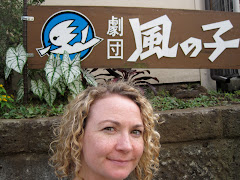
I have only just arrived in Fukuoka and already the hospitality shown to me by Kazenoko Theatre Company is overwhelming. This is approximately (I have lost count) my seventh trip to Japan so you would think that I would be getting used to the way that the Japanese go out of their way for Western guests, however, it never ceases to amaze me. Maybe this is because they always underplay the special things that they do for you, so when they happen they are a great surprise.
Asano-san, meets me at the airport on Sunday night and informs me on the drive back into town that the following few weeks would be a ‘hardo scheduru’. By the way, many English words such as these have made their way into the Japanese language…which makes life a little easier when you are lost for vocab…simply say the English word in a Japanese accent and you have about 50% more chance of being understood. My 'Hardo Scheduru' will include travelling with Kazenoko's shows to Kagoshima, Nagasaki, and a small island, ironically called 'Oshima' (Big Island).
As Asano-san helps me with my luggage into the apartment block , she says ‘Ashita yukuri yasunde kudasai’- please rest slowly tomorrow. She then adds, in Japanese, “And then come to the Kazenoko office at 5pm for a small meeting with the members.” I thank her for greeting me and we say 'Oyasuminasai' (goodnight).
After a day of soaking up Japanese TV convincing myself that it as effective as studying my textbook, I make my way to the Kazenoko office, carefully following the directions that Asano-san gave me. It is an easy twenty- minute walk from my apartment through a really fun part of town- many funky shops, fresh fruit stalls, 'Izakayas' (bars) and resturaunts. Just as I think I am almost there, I realise I am totally lost, but thankfully and kind of magically, Asano-san appears from nowhere on her bicycle to rescue me.
She shows me to the office which, as it turns out, is a big old house (same as Kazenoko in Tokyo). The offices are down stairs, with a small rehearsal room and I learn later in the night that company actor Jiro's 75 year old mum lives upstairs and another member's 27 yr old son lives in another part of the house. At this stage I started to suspect that maybe Kazenoko is one big family.
I follow Asano-san into the house, taking off my boots and climbing into the slippers she provides. I am relieved to enter the air conditioned office, it is very, very hot and sticky outside, it seems I have arrived just in time for 'Tsuyu' (the wet season). Everyone is still working at their desks and stop to look up at me. Feeling bad that I have interrupted, I bow to the room and say 'Minasan, Hajimemashite!' (Nice to meet you all!). I receive an instant round of applause, and one by one, I am greeted with personal introductions, bows and business cards. How will I remember all these names?!
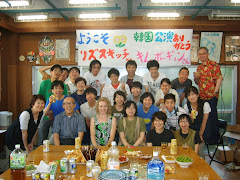
Then after ten minutes, thinking that I have met everyone, I am shown into the rehearsal room where there is a sign 'Yokoso Rizu Sukichi to Kimu Bokyun -san' (Welcome Liz Skitch and Kimu Bokyun) and big spread of food and drinks. I am greeted by President Kariya-san, who then introduces me to Bokyun -san, who is currently visiting from Korea promoting her show “Tokei Tomatta Hi” (The Day the Watch Stopped) and will soon be joined by the rest of her ensemble, 'Sadari Theatre Company'. I discover that I will get to see “Tokei Tomatta Hi” both in Tokyo and at the Kijimuna Festival in Okinawa. It is a co-production between Sadari Theatre Company and Kazenoko. I look forward to finding out more from Bokyun-san over the coming weeks about her company and the show’s journey from its birth (four years ago) to its current tour of Japan.
The room then fills with the company members (there are 23 at the office today). And once drinks are organised for everyone, we 'Kampai!' (Cheers!). Then one by one, the members introduce themselves. I recognise Hayashi-san, the very friendly older manager who speaks English from the ASSITEJ festival, which we attended in Adelaide in May last year. It turns out that he is married to Suehiro-san, the lovely lady who has been organising my trip (we have exchanged many e-mails over the last few months). Suehiro-san already feels like my 'Okasan' (Mother), inquiring throughout the night about my health and telling me many times to take care not to catch a cold.
I also recognise the cast of “Nande-man”, who I met in Tokyo last year, Mari-san and Koike-san. Mari-san shares the story with the group about how last year after seeing their show that I told the cast that I had laughed so much that I nearly wet myself- it is a bit of an embarrassing story but is greeted with another round of applause. Thank goodness this company has a sense of humour!
Then it is my turn. I harness by best Japanese (now aided by the beer I have been consuming) to tell the group about my company's approach to performing and directing which is inspired by my teacher, Philippe Gaulier. I believe if the actors are having fun on stage then the audience has fun watching the show and that is the most important thing in theatre. I then say that this is why I love the work of Kazenoko- because of the joy in their work (or as Gaulier calls it in French, “Le Jeu”). And finally “I am here to learn as much as possible about how Kazenoko creates plays, how you have sustained as a company for 59 years and how you adapt your work for an international audience."
We 'Kampai' again, this time I suggest a “Cheers Mate” and the night rolls by. Eating, drinking, conversation and LOADS of laughter. We talk theatre, we talk comedy, we talk politics and we even end up improvising and miming eating our favourite foods for each other!
At about 11pm Suehiro-san emerges (she has been working in the office) and in her warm and motherly fashion and suggests it might be time for us all to go home. Like good children, we do as we are told, pack up and say our 'Oyasuminasais (goodnights). This confirms my suspicion, Kazenoko Kyushu really is ONE BIG FAMILY.
Subscribe to:
Posts (Atom)